Text size
Line height
Text spacing
We're currently redeveloping our website so you may see a mix of old and new style pages and forms while we complete this work..
Inset Day - Tuesday 1st September 2026, School will be closed to all pupils..
Autumn Term commences on Wednesday 2nd September 2026 for all pupils...
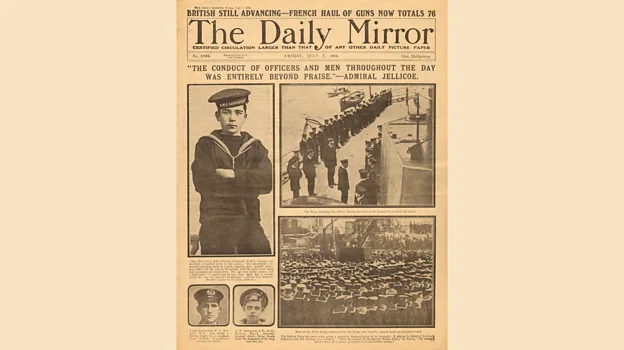
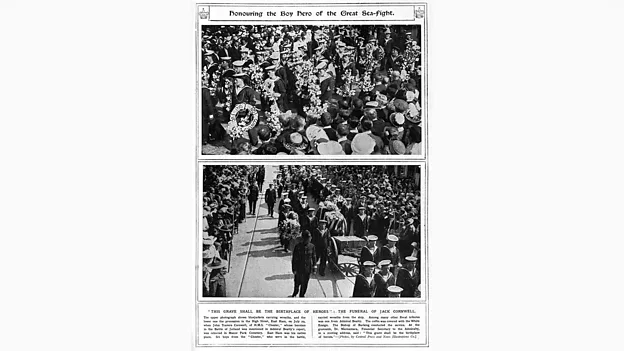
Jack Cornwell, often called “Jutland Jack”, was a young sailor who fought in the Battle of Jutland, the largest sea battle of World War One.
During the battle, Jack showed great courage and bravery, even when he was in danger.
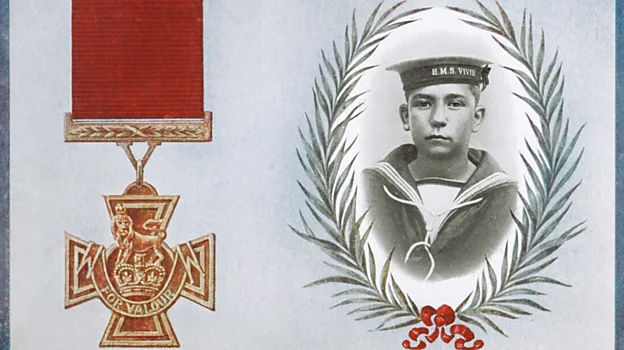
Because of his bravery, he was awarded the Victoria Cross, the highest award in Britain for bravery in battle.
Jack was one of the youngest people to receive a Victoria Cross during World War One.
Jack, whose full name was John Travers Cornwell, was born on 8 January 1900 in Leyton, which is now part of London.
Jack was part of a big family and had five brothers and sisters.
His family did not have a lot of money.
To help support the family, Jack’s father worked in several jobs, including being a soldier, a milkman, and a tram driver.
When Jack moved to his new home in Little Ilford, he went to Walton Road School.
In the early 1900s, most children aged 5 to 14 were expected to go to school. However, some children left school at the age of 12 or 13 to start work.
When Jack was 13 years old, he left school and got a job as a delivery boy. He helped deliver goods for a tea company using delivery vans.
Jack’s love of outdoor adventures began when he became a Scout. He was proud of his badges and was praised for rescuing a girl stuck in a drain.
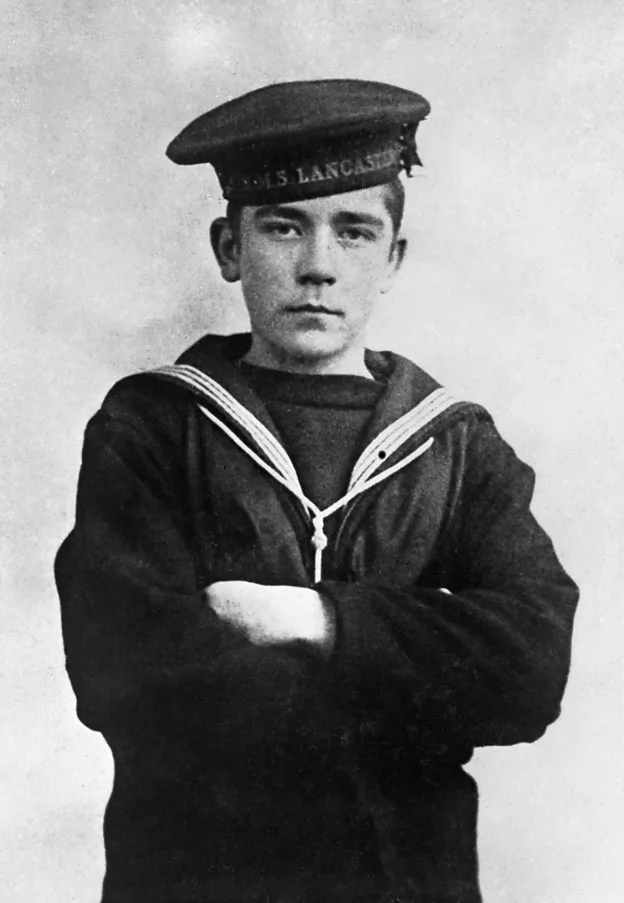 Fun fact: the person in the picture is not actually Jack. Jack's brother was used instead for portraits of Jack.
Jack did not work as a delivery boy for very long.
When the war began in August 1914, Jack and thousands of other men left their jobs to join the Army or Navy and help their country.
At first, Jack tried to join the Navy, but he was told he was too young.
In July 1915, he applied again without asking his parents. He gave the names of his boss and his old headteacher as people who could tell the Navy about him.
This time, Jack was accepted into the Navy.
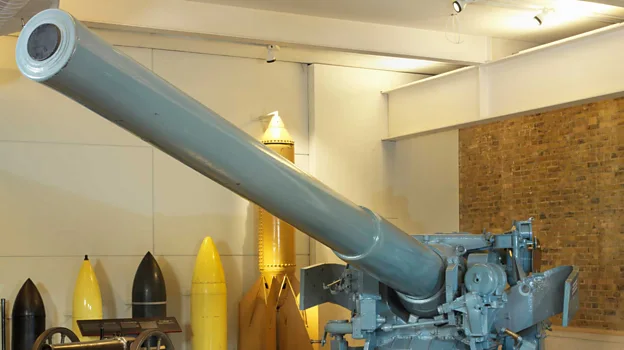
He was sent to Devonport, near Plymouth, to train as a gun layer, also known as a “sight setter.”
During his training, Jack learned how to aim the ship’s guns at targets, follow orders, and work together with the rest of the crew on board the ship.
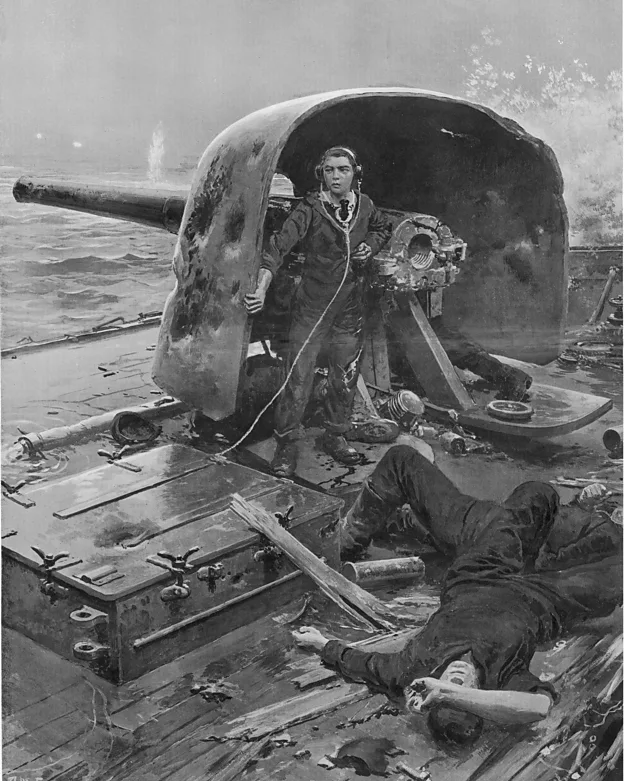 A painting of Jack Cornwell manning a Navy gun during a battle out at sea.
After finishing his training, Jack joined the crew of HMS Chester on 2 May 1916.
Jack and about 400 other sailors sailed into the North Sea to help protect Britain from German ships.
On 31 May 1916, British sailors saw German ships near Jutland, a place in Denmark.
The ships began firing their guns at each other, and the Battle of Jutland started.
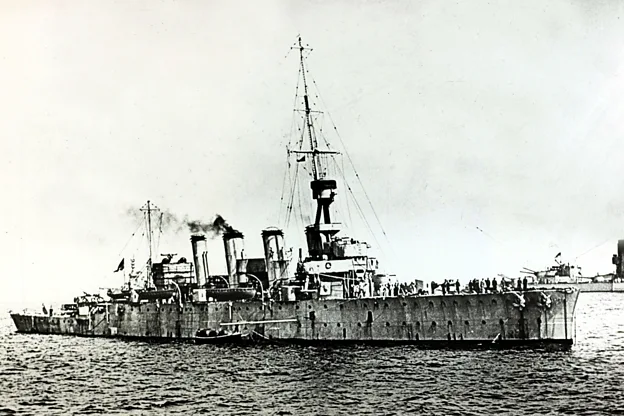
After firing their guns for many hours, Jack’s ship was attacked by four German ships.
Large weapons called shells hit the ship. Sadly, the other sailors in Jack’s gun crew were either killed or badly hurt.
Jack was the only one left at his gun. Even though he was injured and the ship was still under attack, he bravely stayed at his post and waited for instructions.
When rescuers found him, he was still alive but had been badly injured by pieces of flying metal.
Although the ship was damaged, HMS Chester safely returned home, and Jack was taken to a hospital in Grimsby.
The doctors asked for his mother to come to see him. Sadly, before she arrived, Jack died on 2 June 1916.
 This illustration shows sailors on a German destroyer attempting to repair the damage on their ship, demonstrating how violent the Battle of Jutland was.