Text size
Line height
Text spacing
Inset Day - Tuesday 1st September 2026, School will be closed to all pupils..
Autumn Term commences on Wednesday 2nd September 2026 for all pupils...
Updated Dinner Menus - Click here to view the updated menus
The Sun is the star at the centre of our Solar System and it's orbited by all the planets, including Earth. Without the Sun, life on Earth would not be possible as it provides heat and light for our planet.
The Sun is important to us because it is the main source of energy for life on Earth.
Nuclear reactions happen in the very hot core of the Sun when atoms of hydrogen combine. This process is called ' 'nuclear fusion' and it releases energy in the form of heat and light.
Light is important for plants to grow and the plants provide us with oxygen and lots of other things too.
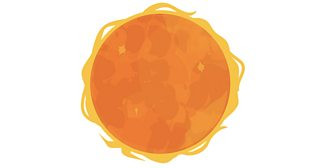
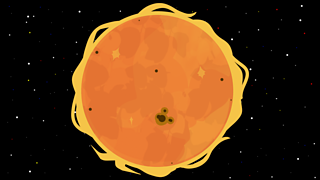
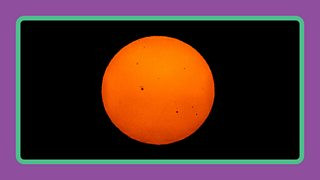


The Sun is about 100 times wider in diameter than Earth and 1,300,000 Earths would fit inside it!
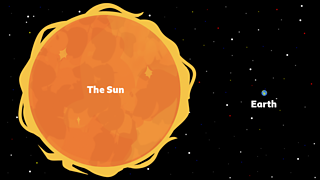
Even though the Sun is huge when we are standing on Earth looking across the sky, the Sun seems like a tiny ball. This is because it is so far away from Earth.
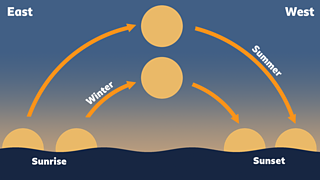
The Sun can appear to move into the sky because it isn't always in the same place when we look up, but it isn't actually the Sun moving at all… it's the Earth!
As the Earth rotates on its axis, the Sun appears to rise to the east of us, travel higher in the sky in a big arch, and then set to the west before disappearing altogether when day turns into night.
The seasons can also affect where the Sun is in the sky. The Sun appears to be much higher in the sky in the summer months, and much lower in the sky in the winter months. This is because of the way that the Earth is tilted on its axis.
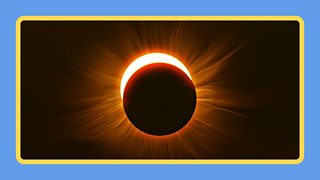
You should never look at the Sun directly; it is so bright that you could damage your eyes. Scientists are able to look at the Sun by using special telescopes.

You should never look into the Sun, even when wearing sunglasses
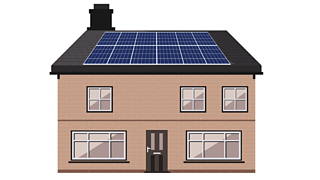
The Sun emits (gives out) light energy, which travels to Earth and can be captured by solar panels.
The light of the Sun travels over 93 million miles to Earth in just over 8 minutes.
The Sun produces renewable energy because the Sun's energy isn't going to run out for billions of years, unlike non-renewable energy such as coal or gas.