Text size
Line height
Text spacing
Inset Day - Tuesday 1st September 2026, School will be closed to all pupils..
Autumn Term commences on Wednesday 2nd September 2026 for all pupils...
Updated Dinner Menus - Click here to view the updated menus
The world wide web is made up of nearly 2 billion websites.
Each has its own URL, or web address.
You'll know the URL of some of your favourite webpages. You use this to visit these webpages.
What happens if you want to go to a webpage and you don't know the URL?
A search engine is a program that finds webpages on the web.
You type in the words that you want information on.
The search engine then looks for webpages that contain that information.
A search engine is like a helpful librarian.
When you go to a library, you can ask the librarian to find books about something you like.
The librarian looks through a big list that helps them find where all the books are.
This list has important details about every book in the library.
Then, the librarian tells you which books might be just what you’re looking for.

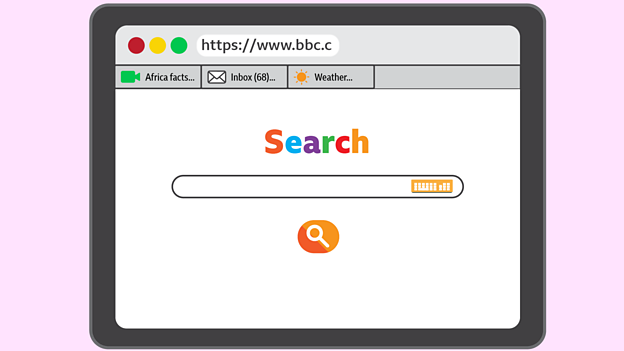

There are lots of search engines you can use to find things on the internet. Most of them work in a similar way.
When you search, it’s important to think carefully about the words you type. For example, if you type “Wellington”, you might get different results, like:
If you add more words, like “Wellington New Zealand”, you can get better and more exact answers.
Some search engines only look for certain things, like news, pictures, or facts.
There are also special search engines made just for children. These help keep you safe by not showing anything that isn’t suitable for kids.
A search engine is like a giant library for the internet.
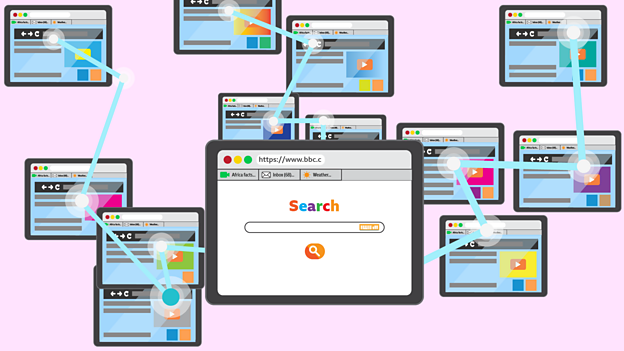
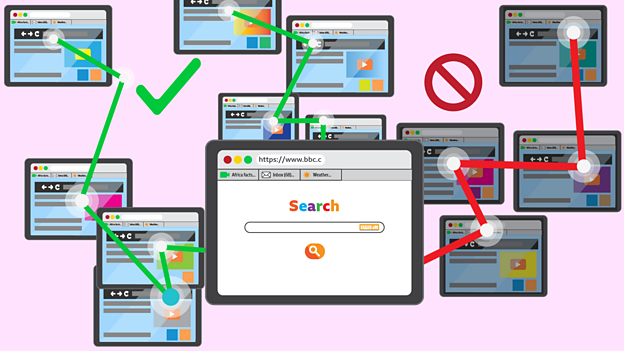
It uses a special robot called a web crawler to explore websites.
The web crawler goes from page to page, just like clicking links, and looks at what’s on each page.
When it visits a page, it makes a copy and saves the page’s address (called a URL).
It also remembers important words and what’s on the page, like pictures or videos.
All of this information is stored in a big list called an index.
When you type something into a search engine, it looks through this list to find the best matches for your words.
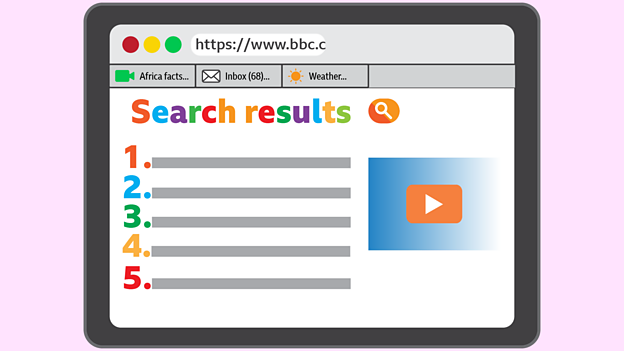
Search engines have to decide which websites to show you first.
They use special rules called algorithms to sort the pages.
The pages at the top are usually the most helpful ones.
Before this happens, web crawlers have already visited all the pages and saved them.
So when you search for something, the search engine:

